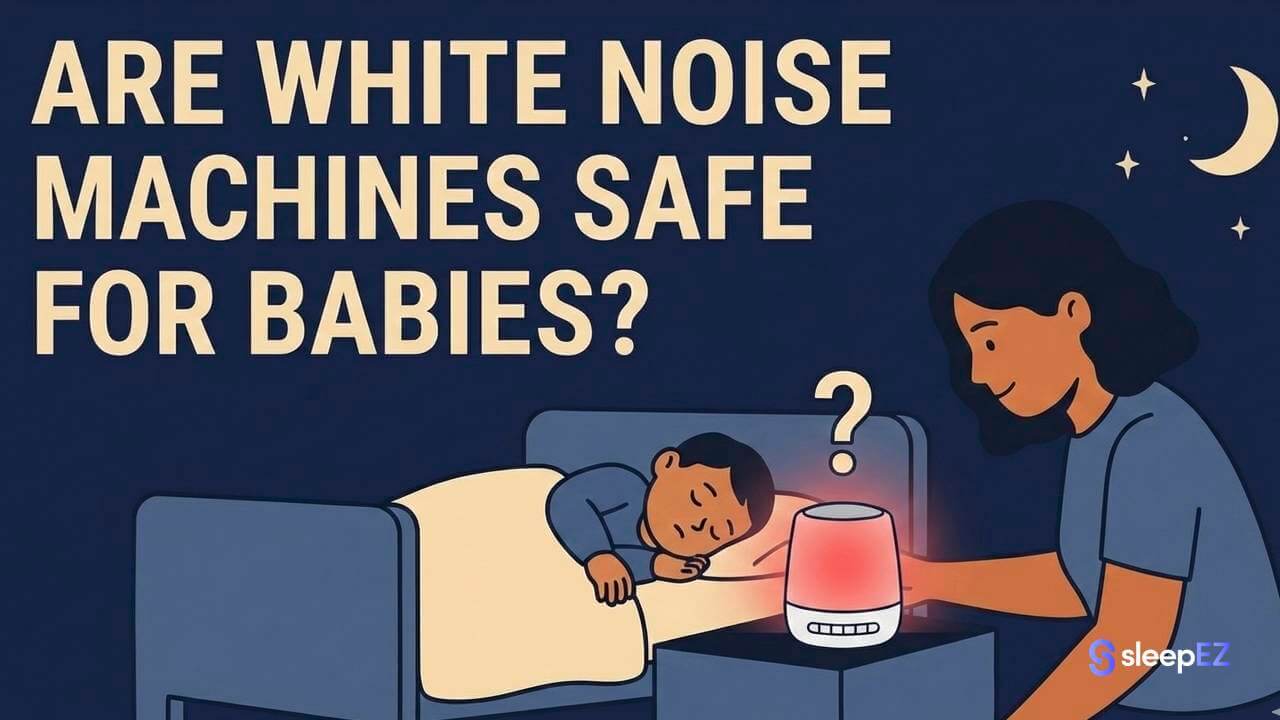
Many parents swear by white noise machines to help their babies sleep longer. But is it really safe to use one every night?
When used correctly, white noise can be a safe and effective tool for better baby sleep. The key is keeping it at the right volume and distance.
This guide covers what science says about white noise, how to use it safely, and when it might not be right for your baby.
What Is White Noise (and Why Do Babies Like It)?
White noise creates a consistent sound that blocks out sudden noises. Think of a fan running or soft static.
Babies find it calming for three main reasons:
It sounds like the womb. Your baby spent nine months hearing blood flow, heartbeat, and muffled sounds. White noise feels familiar.
It masks sudden sounds. A barking dog or closing door won't wake your baby as easily.
It creates a sleep signal. Babies learn to connect the sound with bedtime.
Research backs this up. A 1990 study in Archives of Disease in Childhood found that 80% of newborns fell asleep within five minutes with white noise. Only 25% fell asleep that fast without it.
Are White Noise Machines Safe for Babies?
Yes, when you follow basic safety rules.
White noise only becomes risky when it's too loud or too close to your baby's ears. Used properly, it won't harm their hearing or development.
Here are the safety guidelines:
- Volume: Keep it below 50 decibels (about as loud as a quiet talk)
- Distance: Place it at least 6 to 7 feet from the crib
- Duration: Safe to use all night if volume stays low
The American Academy of Pediatrics supports white noise use. Their guidance is simple: keep the volume moderate and place the machine across the room.
These rules exist for good reason. A 2014 study in Pediatrics tested 14 infant sound machines. All of them exceeded 50 decibels at maximum volume. Some hit 85 decibels when placed right next to the crib.
That's why proper setup matters. The machine itself isn't dangerous. Using it wrong is.
The Risks of Incorrect Use
White noise can cause problems if you're not careful about volume, placement, or how long you use it.
Hearing Risk
Sounds above 85 decibels can damage hearing over time. This applies to anyone, including babies.
A white noise machine turned up too high or placed too close creates this risk. But you control both factors.
Sleep Dependency
Some babies become very attached to white noise. They won't sleep without it.
This isn't always a problem. But it can make naps at grandma's house or travel harder.
Sound Interruptions
Machines that loop or have gaps can wake light sleepers. The sudden quiet or restart alerts your baby that something changed.
Think of white noise as a comfort tool, not a requirement. Use it wisely and your baby will benefit without side effects.
Read: White Noise Machine Baby
How to Use White Noise Machines Safely
Follow this checklist every time you turn on a white noise machine:
- Set the volume low. Aim for conversation level or quieter.
- Place it far from the crib. At least 6 to 7 feet away works best.
- Never put it in the crib. Keep it on a dresser or shelf across the room.
- Choose steady sounds. Avoid machines with sudden changes or clear loop points.
- Test from your baby's spot. Lie where they sleep. If it sounds loud to you, it's too loud for them.
- Turn it off during awake time. Let your baby hear normal household sounds when they're up.
How to Check Volume Without a Decibel Meter
Most parents don't own sound meters. Here's how to check if your white noise is too loud:
The conversation test: Stand where your baby sleeps. Can you talk at normal volume and be heard clearly? If you need to raise your voice, turn the machine down.
The sleep test: Lie down at crib level. Does the sound feel intrusive? If yes, it's too loud.
Use your phone: Download a free decibel meter app like Decibel X or Sound Meter. These aren't perfect but give you a general reading. Stay between 45 and 50 decibels.
Compare to familiar sounds:
- Whisper: 30 decibels
- Quiet library: 40 decibels
- Normal conversation: 60 decibels
- Your target: 45 to 50 decibels (between library and conversation)
Check the volume each time you use the machine. Settings can change if someone else adjusted it or if the machine was moved.
When White Noise Might Not Be Ideal
Most babies do fine with white noise. But some situations call for caution or a different approach.
Skip white noise if your baby:
- Has diagnosed hearing problems
- Currently has an ear infection
- Has fluid buildup in their ears
Also avoid unregulated apps or DIY sound sources. These can spike in volume without warning.
If your baby seems bothered by white noise or you're not sure it's right for them, ask your pediatrician. They can check your baby's hearing and give you personal advice.
Alternatives or Complements to White Noise
White noise isn't the only option for better baby sleep. Try these alternatives:
Pink noise: Softer than white noise with more low tones. Sounds like steady rain or wind.
Heartbeat sounds: Mimics what babies heard in the womb without the static quality.
Lullabies: Gentle music at low volume can work for some babies.
Natural sounds: Ocean waves, light rain, or soft wind at quiet levels.
Sleep routine cues: Dim lights, same bedtime each night, and calm activities signal sleep without sound.
You can combine white noise with these other tools. The goal is creating a calm space that helps your baby rest.
Final Thoughts
White noise can be a safe and helpful sleep aid for babies. The science supports it when done right.
Keep the volume low, place the machine across the room, and use it as part of a full bedtime routine. Don't rely on it as the only way your baby can sleep.
Thousands of parents use white noise every night with no problems. Follow the safety guidelines and you can too.
Your baby's sleep matters. So does their hearing. With proper use, white noise supports both.

Leave a comment
This site is protected by hCaptcha and the hCaptcha Privacy Policy and Terms of Service apply.