

You check into your hotel room exhausted. The bed looks perfect, the sheets are crisp, and you're ready to collapse. But two hours later, you're still awake. Your eyes are open, staring at the ceiling while your body begs for rest.
It's not the mattress. It's not jet lag. It's your brain doing exactly what it's supposed to do.
The Science Behind Your Sleepless Hotel Nights
Scientists call it the "First-Night Effect." Your brain doesn't trust new places, so it stays partially awake to watch for danger.
Researchers at Brown University studied 35 people sleeping in unfamiliar rooms. They found something remarkable: one half of the brain stays more alert than the other during the first night. Your left hemisphere acts like a security guard, monitoring every unfamiliar sound and shadow while you try to rest.
Think of it like a dolphin. These animals sleep with one brain hemisphere awake to watch for sharks. Your brain does the same thing in a hotel room, scanning for threats that don't exist.
This is why the elevator ding at 2 AM jolts you awake. Your brain flags it as "new" and potentially dangerous. The blinking smoke detector that wouldn't bother you at home becomes a laser beam of distraction.
Dr Andy Galpin, human performance scientist speaking on The Diary Of A CEO, describes the same pattern from a different angle. In an unfamiliar environment, your brain doesn't yet register the space as safe, and all the small cues that normally tell your body it's time to sleep, sound, light, smell, temperature, the feel of the bed, are suddenly missing or different. Your circadian system leans on those cues more than most people realise, and a new room strips out most of them at once. Different research, same conclusion: it's not the mattress or how tired you are, it's your brain doing exactly what it evolved to do somewhere unfamiliar.
The good news? You can trick your brain into feeling safe.
Your Brain Needs Familiar Signals to Relax
Your bedroom at home sends constant signals that tell your brain: "This is safe. You can shut down completely."
Hotels send the opposite message. Every beep, blink, and bump is unfamiliar. Your brain interprets unfamiliar as unsafe, and unsafe means staying alert.
The solution isn't about finding better hotels. It's about bringing your sensory environment with you. When you control what you see, hear, and breathe, your brain stops acting like a guard dog.
None of the fixes below works as a single magic switch. As Galpin points out, the win comes from stacking several familiar cues at once, sound, light, smell, feel, so your brain gets multiple signals telling it the space is safe, not just one.
6 Ways to Build Your Portable Sleep Sanctuary
1. Block Every Light Source
Hotel curtains lie. They promise darkness but deliver gaps that let in hallway light, parking lot floods, and early sunrise. Even worse are the device lights: smoke detectors blinking red, thermostats glowing green, and TV standby lights that shine like tiny spotlights.
You can't tape over every LED in the room. Instead, bring your own blackout system.
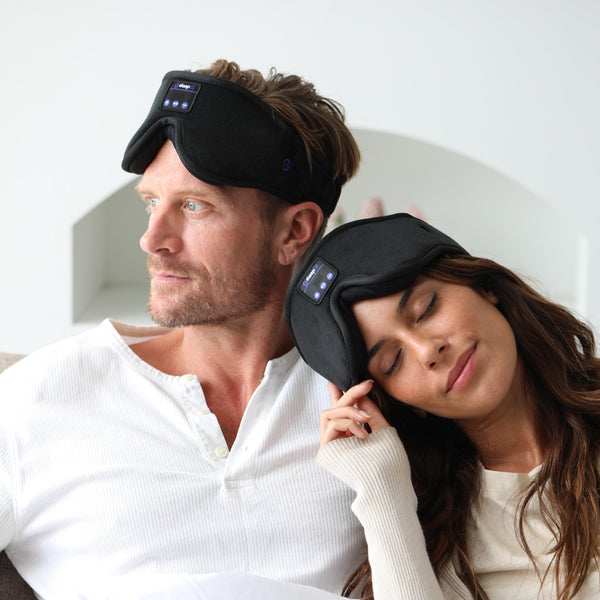
A quality sleep mask blocks 100% of light while staying comfortable. Look for contoured designs that don't press on your eyelids. The Dreamy Sounds Sleep Mask goes further by adding Bluetooth speakers, so you can play familiar sounds or podcasts. Your brain hears something it recognises and relaxes faster.
Recommended for this guide
Dreamy Sounds Sleep Mask
100% blackout with built-in Bluetooth speakers, so gaps in hotel curtains and hallway light stop reaching you, and you can play something familiar to fall asleep to instead.
Complete darkness triggers melatonin production. Even small amounts of light can disrupt your sleep cycle and make you feel groggy the next day.
2. Create a Consistent Sound Floor
Silence in a hotel is never really silent. It's punctuated by ice machine motors, elevator chimes, hallway conversations, and doors slamming. These sudden noises spike your alertness because your brain flags them as potential threats.
White noise masks these spikes by creating a steady sound that your brain learns to ignore. A portable sound machine like the Hush+ generates consistent background noise that covers up the unpredictable sounds from hallways and neighbouring rooms.
Pink noise or brown noise work even better for some people. They contain lower frequencies that feel more natural than pure white noise. The key is consistency: your brain stops listening when the sound never changes.
3. Stop Mouth Breathing in Dry Hotel Air
Hotel AC units strip moisture from the air. You go to sleep breathing normally and wake up at 4 AM with a desert in your mouth and a scratchy throat.
The problem isn't just discomfort. Mouth breathing during sleep reduces oxygen intake and can trigger snoring. When you breathe through your mouth, dry air hits your throat and lungs directly without being filtered or humidified.
According to research published in the European Respiratory Journal, nasal breathing during sleep significantly reduces airway resistance and cuts down on breathing disruptions. Your nose warms and filters air before it reaches your lungs.
This simple change helps avoid the dry throat that wakes you up and supports deeper sleep in low-humidity environments.
4. Block Neighbour Noise Completely
Thin hotel walls are a gamble. Sometimes you get lucky. Other times you get the snorer next door, the couple arguing upstairs, or the party down the hall.
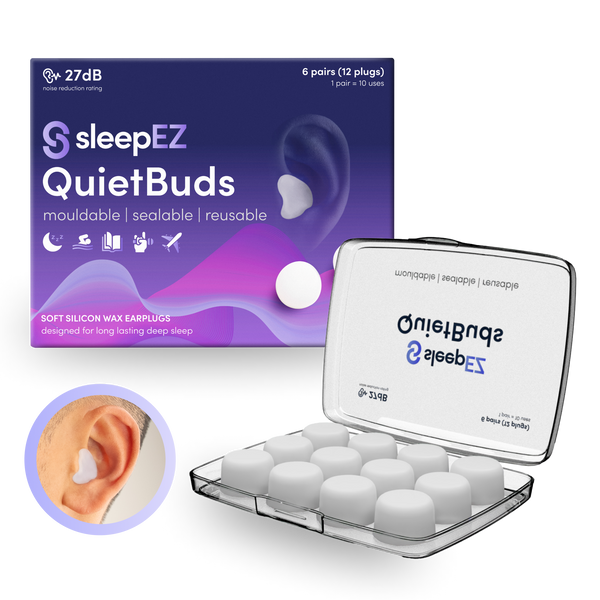
For complete sound isolation, you need high-quality silicone earplugs. QuietBuds use soft foam that moulds to your ear canal while filtering out voices and sudden noises without creating that underwater feeling.
Recommended for this guide
QuietBuds Earplugs
Soft silicone that moulds to your ear canal, blocking 27dB of noise without that underwater feeling, so the neighbours, the hallway, and the ice machine stop reaching you.
They're especially valuable in city hotels where street noise, sirens, and garbage trucks start before sunrise. Total silence gives your brain permission to shut down both hemispheres.
5. Control Temperature and Visual Clutter
UCLA Sleep Disorders Center researchers confirm that people sleep best between 60 and 65 degrees Fahrenheit. Your body temperature needs to drop slightly to trigger deep sleep. A cool room helps this happen.
Set the thermostat to 65°F before bed. If the room feels too cold at first, start at 68°F and adjust down once you're under the covers.
Also, unpack your suitcase right away. Living out of luggage creates visual chaos that keeps your brain in "temporary" mode. Hang up your clothes and put your toiletries in the bathroom.
These small actions signal to your brain that this space is yours, even if just for a night.
6. Bring Your Own Pillow (and Other Familiar Cues)
Elite athletes who travel to a new city every three to five days don't try to force sleep in a completely unfamiliar setup, Dr Andy Galpin explains. They recreate a version of their home sleep environment wherever they land, and one of the simplest, most common habits is bringing their own pillow.
It restores a physical cue your body already associates with sleep, something no hotel pillow menu can replicate.
If you can't manage a full-size pillow, even a small travel one works. And if you're looking for one more cue to stack on top of it, a familiar scent can help too.
Galpin notes lavender is moderately associated with helping people fall asleep, and suggests using it consistently at home first so the scent itself becomes a sleep cue you can then travel with. A 2025 meta-analysis of 11 randomised controlled trials (628 adults) found lavender essential oil improved sleep quality, with a larger effect when the oil was placed close to the pillow rather than farther away.
This is moderate evidence, not a sure thing, and the researchers themselves say it needs confirming in more high-quality trials, so think of it as one small stackable cue, not a standalone fix.
Your Hotel Sleep Checklist
Pack these items in your carry-on:
- Blackout sleep mask to eliminate light from curtain gaps and device LEDs
- Portable white noise machine to mask hallway and neighbour sounds
- Sleep earplugs for complete sound isolation in noisy hotels
- Mouth tape to help avoid dry throat from air conditioning
- A travel pillow, even a compact one, for a familiar physical cue
- A familiar scent, like lavender, if you already use one at home
- Binder clips to seal curtain gaps if your mask isn't enough
Watch: Dr Andy Galpin on Sleeping in New Environments
Dr Andy Galpin, human performance scientist, on the first night effect and what elite travelling athletes do about it, from The Diary Of A CEO.
Sleep Like You're Home, Anywhere
You can't redesign hotel rooms, but you can control what reaches your senses. When you block unfamiliar lights and sounds while breathing properly, your brain stops scanning for threats. It finally believes it's safe to sleep deeply.
Don't leave your rest to chance when you travel. Pack your Dreamy Sounds Sleep Mask, your Hush+ Sound Machine, and your own pillow if you can manage it, next to your toothbrush. These tools take up less space than a book but make the difference between staring at the ceiling and actually sleeping.
Your brain wants to protect you. Give it the signals it needs to stand down, and you'll wake up refreshed instead of exhausted.


Leave a comment
This site is protected by hCaptcha and the hCaptcha Privacy Policy and Terms of Service apply.