

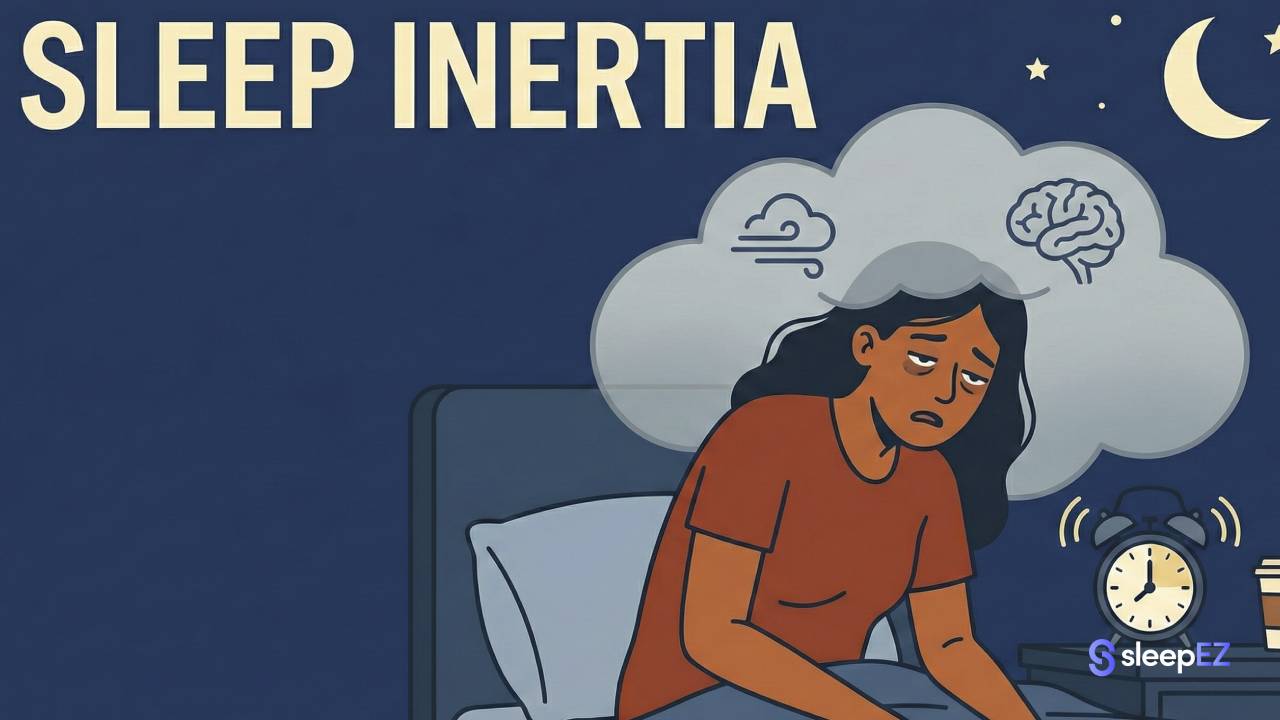
You close your eyes for 20 minutes. You wake up feeling like you've been hit by a truck. Your head throbs. Your thoughts move like cold honey. You feel worse than before you laid down.
This isn't just "being tired." It's called sleep inertia, and it's a real physiological state.
According to the CDC's National Institute for Occupational Safety and Health, sleep inertia causes temporary confusion and reduced performance that typically lasts 30 to 60 minutes. In severe cases, it can persist for up to two hours.
Here's how to fix it right now.
Quick Fix: The 5-Step Wake-Up Protocol
To get rid of groggy feelings immediately, follow this protocol: Seek bright light, stimulate your ears with sound, drink water, move your body, and use caffeine strategically.
Let's break down each step.
The Emergency Protocol: How to Fix It Right Now
You need to shock your system back online. These five methods work because they target different brain regions responsible for alertness.
1. The Light Shock
Step outside or stand near a bright window for 2 minutes. Bright light stops your brain from producing melatonin, the hormone that makes you sleepy.
If it's nighttime, turn on every light in your room. Look at your phone screen at maximum brightness. Blue light works best because it mimics daylight and signals your brain that it's time to be awake.
2. The Sensory Jolt (Sound)
Your brain is stuck in slow-wave sleep mode. You need to wake up your auditory cortex.
Research published in Nature and Science of Sleep found that pink noise and music reduce sleepiness and improve cognitive performance for up to 20 minutes after waking.
Turn on white noise or play high-tempo music. The Hush+ Sound Machine offers multiple sound options designed to stimulate beta brainwaves, which are associated with alert, focused thinking.
Set it to static white noise or choose an upbeat nature sound. Let it play for 5 to 10 minutes while you do the other steps.
3. The Hydro-Therapy
Drink 16 ounces of cold water immediately. Your brain is about 75% water, and even mild dehydration slows cognitive function.
Then splash cold water on your face and wrists. The shock constricts blood vessels and triggers an alert response from your nervous system.
4. Movement
Do 10 jumping jacks or walk briskly for 2 minutes. Physical movement increases blood flow to your brain.
The same NIH research shows that cerebral blood flow returns slowly to the frontal regions of your brain after waking. Movement speeds up this process.
You don't need a workout. Just enough activity to get your heart rate up slightly.
5. Strategic Caffeine
Have caffeine now, not before your nap. The CDC reports that caffeine consumed after waking reduces the duration of sleep inertia.
Coffee takes about 15 minutes to kick in, which aligns with how long the other steps take. By the time you finish your water and movement routine, the caffeine will start working.
Why Did This Happen? (The Science)
You didn't do anything wrong. Sleep inertia happens for two main reasons.
Reason A: The Deep Sleep Trap
Naps longer than 30 minutes let you enter deep sleep, also called slow-wave sleep. When you wake up during this stage, your brain hasn't finished its sleep cycle.
Think of it like pausing a movie halfway through. Your brain expected to complete the full cycle and got interrupted instead.
Your prefrontal cortex, which handles decision-making and alertness, takes the longest to "boot up" after deep sleep. That's why you can walk around but can't think clearly.
Reason B: The Oxygen Drop
Did you wake up with drool on your pillow? You were mouth breathing.
Mouth breathing during sleep reduces oxygen efficiency. Your body has to work harder to get the same amount of oxygen compared to nose breathing.
Lower oxygen levels in your blood mean less oxygen reaches your brain. This creates what some researchers call "hypoxic brain fog."
Using Breathe Mouth Tape during naps keeps your mouth closed and forces nasal breathing. Nasal breathing filters air, warms it, and delivers more usable oxygen to your lungs.
You wake up oxygenated and clear-headed instead of groggy and confused.
Prevention: How to Nap Like a Pro Next Time
The best way to avoid sleep inertia is to prevent it. Here's how to nap correctly.
Follow the 20-Minute Rule
Set an alarm for exactly 20 minutes. This keeps you in light sleep stages where waking up feels natural and refreshing.
You won't enter deep sleep, so you won't experience that "hit by a truck" feeling.
Try the Nappuccino
Drink coffee right before your nap. Caffeine takes about 20 minutes to enter your bloodstream. You'll fall asleep easily and wake up just as the caffeine kicks in.
This technique doubles your wake-up power.
Create a Sensory Cocoon
Interruptions cause worse inertia. If you wake up multiple times during a short nap, you never settle into a restful state.
The bluetooth sleep mask blocks light completely while playing gentle sounds. Pair it with Silicone Earplugs to eliminate background noise.
Protecting your 20-minute window ensures you get quality rest without going too deep.
The Neurodivergent Connection (ADHD/Autism)
If you have ADHD or autism, sleep inertia hits harder.
Research from the National Institutes of Health shows that 25% to 50% of people with ADHD report sleep problems in clinical settings. The actual number is likely higher because many cases go unreported.
ADHD brains struggle with "state transitions," which means switching from one activity or mental state to another. Going from sleep to wakefulness is one of the hardest transitions.
Your brain needs stronger sensory cues to make the switch. That's why the emergency protocol works so well for neurodivergent adults.
You need more than just an alarm. You need light, sound, movement, and chemical signals (caffeine) all working together.
Don't fight your biology. Work with it by creating a strong multi-sensory wake-up routine.
Conclusion
Sleep inertia isn't a personal failing. It's a biological response to waking during the wrong sleep stage or under poor conditions.
The fix is simple: light, sound, water, movement, and caffeine. Use all five immediately after waking for fastest results.
For prevention, respect the 20-minute limit. Use Breathe Mouth Tape to optimize oxygen. Protect your nap with the Dreamy Sound Sleep Mask and QuietBuds.
Set that alarm. Your brain will thank you.

Leave a comment
This site is protected by hCaptcha and the hCaptcha Privacy Policy and Terms of Service apply.