
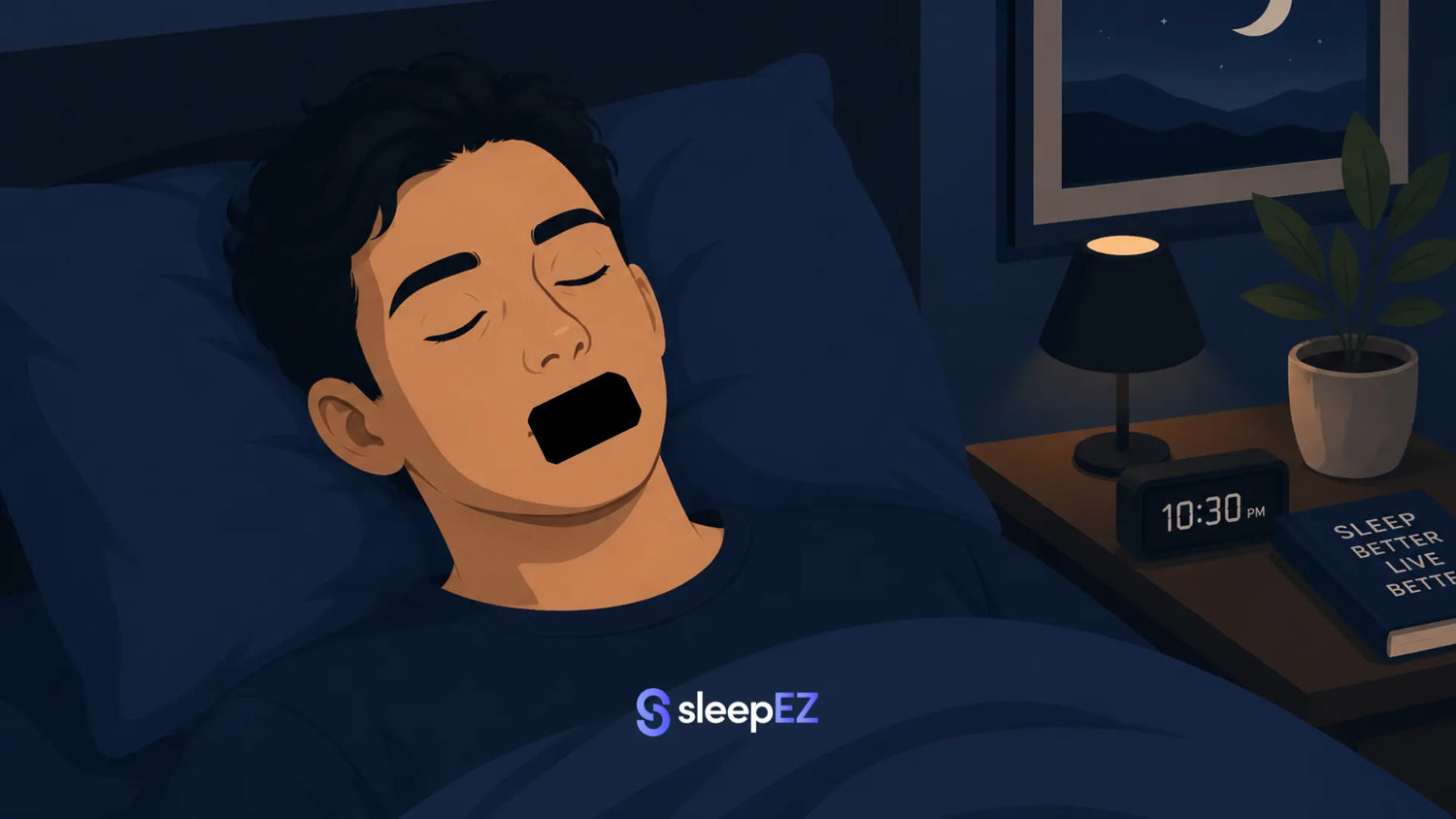
Ready to try mouth taping? Getting started is simple.
This guide will walk you through the correct way to apply mouth tape for a comfortable and effective experience.
Using a purpose-built tape is the first step to success. Let's get you set up for a better night's sleep.
Quick Answer: How Do You Use Mouth Tape?
- Wash and dry your face, remove any oils or moisturiser from the lip area
- Breathe through your nose for 30 seconds to confirm clear nasal airflow
- Peel the tape and centre it over your lips
- Press gently for 10 seconds to activate the adhesive
- Sleep as normal, the tape will stay in place overnight
Purpose-built mouth tape like Breathe Mouth Tape uses a gentle adhesive that holds securely but releases cleanly in the morning.
Why People Use Mouth Tape for Sleep
Mouth tape is used to encourage nasal breathing during sleep. Here's why that matters:
Reduces dry mouth.
When you breathe through your mouth overnight, air evaporates saliva continuously. Keeping your mouth closed allows saliva to do its job, protecting teeth and gums. See our article on waking up with a dry mouth.
May reduce snoring.
Mouth breathing is a primary driver of snoring. Keeping the mouth closed redirects airflow through the nose, which may reduce or eliminate mouth-breathing snoring.
Supports nasal breathing.
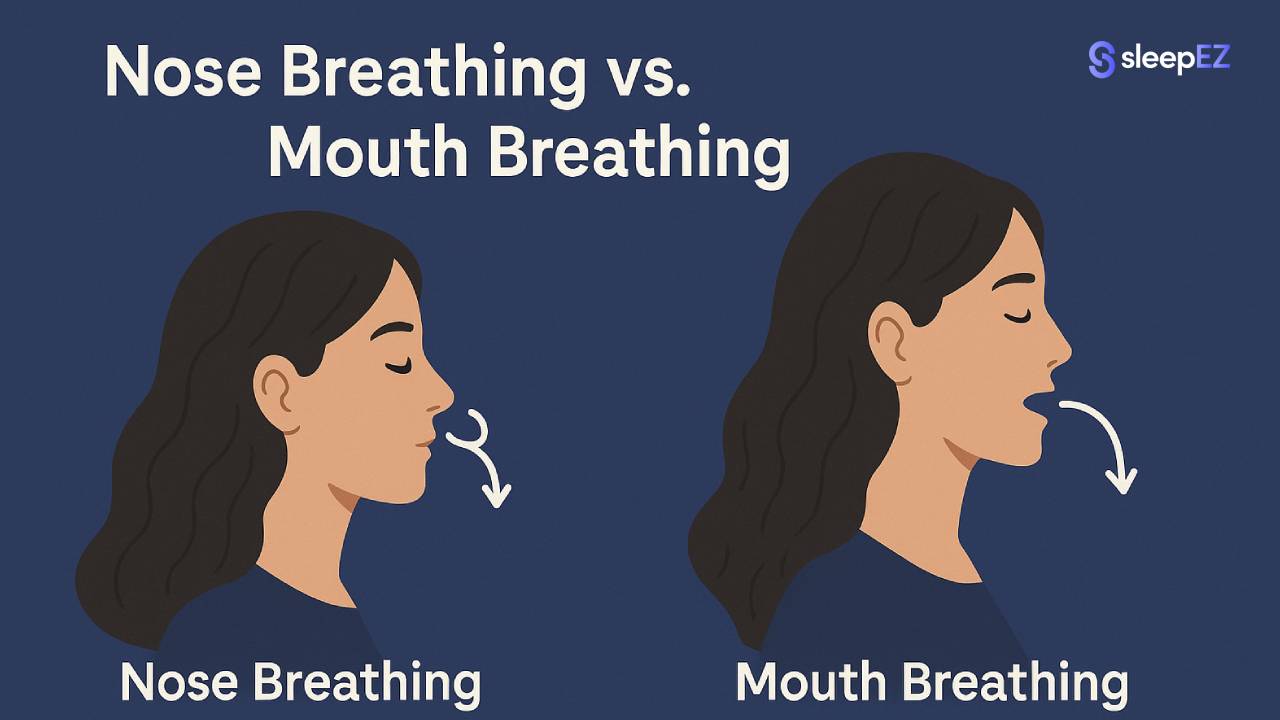
Your nose filters, humidifies, and warms air before it reaches your lungs. Nasal breathing is generally considered more efficient and beneficial than mouth breathing during sleep.
Improves sleep quality.
Some people report waking feeling more refreshed after switching from mouth to nasal breathing, though individual results vary.
Who Should NOT Use Mouth Tape
Mouth tape is not appropriate for everyone. Do not use mouth tape if you:
- Cannot breathe comfortably through your nose, congestion, a deviated septum, or nasal polyps may make nasal breathing impossible
- Have diagnosed or suspected sleep apnea, consult your doctor before using mouth tape; it is not a treatment for sleep apnea
- Have significant nasal allergies, if your nose is blocked most nights, address the congestion first
- Have a respiratory condition, asthma, COPD, or other breathing conditions require medical guidance
- Experience nausea or vomiting, mouth tape is not safe if there is any risk of vomiting during sleep
- Have severe anxiety or claustrophobia, the sensation of a taped mouth may cause distress
If in doubt, consult your doctor before starting.
What to Expect on Your First Night
First-time mouth tape users often wonder what it will feel like. Here's what's normal:
Mild awareness.
You'll likely be conscious of the tape for the first 10–15 minutes. This is normal and typically fades as you relax.
Not restrictive.
Purpose-built mouth tape is not designed to seal your mouth shut like duct tape. You can open your mouth if needed, the tape provides gentle resistance, not a locked seal.
May feel strange.
The sensation of something on your lips is unfamiliar. Most people adapt within 2–3 nights.
You will not suffocate.
This is the most common fear, and it's unfounded. Your nasal passages remain fully open.
If you feel any genuine difficulty breathing, remove the tape immediately.
Most people adapt quickly.
The majority of users report that by night 3–5, the tape feels completely natural.
5 Common Mouth Taping Mistakes to Avoid
Mistake 1: Applying on Oily or Moisturised Skin
Oils, moisturisers, and beard products prevent the adhesive from bonding. Always wash and dry your face before applying.
Mistake 2: Using the Wrong Type of Tape
Standard medical tape, plasters, or duct tape are not designed for this purpose. They use aggressive adhesives that can irritate skin or pull painfully on removal. Use purpose-built mouth tape.
Mistake 3: Trying to Tape Through Nasal Congestion
If your nose is blocked, mouth tape won't work, and may cause anxiety. Clear your nasal passages first with nasal strips or a saline rinse.
Mistake 4: Giving Up After One Night
The first night is always the hardest. Most people need 3–7 nights to adapt fully. If it feels uncomfortable initially, that's normal, not a sign it isn't working.
Mistake 5: Applying Too Loosely
The tape should make gentle contact with your lips. If it's too loose, it will fall off during the night. Press firmly for 10 seconds after application.
Before You Begin: 3 Essential Prep Steps
These quick prep steps make all the difference between a comfortable night and a frustrating one.
1. Perform a Nasal Breathing Check
Close your mouth and breathe through your nose for 30 seconds. Can you breathe comfortably? If yes, you're ready. If you struggle, address any nasal congestion first. Mouth taping only works when your nose is clear.
2. Wash and Dry Your Face
Clean, dry skin creates a better seal and prevents irritation. Wash the area around your mouth with mild soap and pat it completely dry. This step matters even more if you have a beard. Oil and moisture weaken the adhesive.
3. Choose the Right Tape
Skip the duct tape and painter's tape. Those will damage your skin. You need a tape designed for overnight skin contact. The SleepEZ Breathe Mouth Tape uses hypoallergenic adhesive and a shape designed specifically for your lips. Regular tape doesn't have either.
How to Apply Mouth Tape in 3 Easy Steps
Step 1: Peel
Carefully peel the SleepEZ tape from its backing. Notice the unique lip-shaped design. This isn't a rectangle. It's curved to match the natural shape of your mouth, which means better comfort and a stronger seal.
Step 2: Stick
Close your lips gently. Center the tape over your mouth. The flexible material adapts to your lips for a barely-there feel.
Press down gently from the center outward. This removes air bubbles and secures the seal. The design keeps the adhesive on your lips, not on surrounding skin or facial hair.
Step 3: Sleep
You're done. The tape holds strong for 12+ hours, even if you toss and turn. The flexible design lets you make minor movements like smiling or shifting position without breaking the seal.
Can You Breathe Through Mouth Tape?
Yes, purpose-built mouth tape is not designed to seal your mouth shut.
The tape provides gentle resistance that encourages your lips to stay closed, but you can open your mouth if needed. This is an important safety feature, if you need to cough, sneeze, or speak, you can.
What mouth tape does: Provides a gentle reminder to keep your lips together, redirecting breathing through the nose.
What mouth tape doesn't do: Lock your mouth shut, prevent emergency mouth opening, or restrict breathing.
This is why purpose-built mouth tape is very different from using regular tape or plasters, the adhesive is specifically calibrated for comfort and safety.
How Long Should You Wear Mouth Tape?
For a full night's sleep: Apply before bed and wear throughout the night. Most people find the tape stays in place for 7–9 hours without issue.
If you're new to mouth tape: Start with 30–60 minutes while you're still awake and relaxed. This helps you get comfortable with the sensation before committing to overnight use.
Gradual approach: Some people prefer to start with 1–2 hours, then increase to a full night over several days. Either approach works, consistency is more important than duration.
Can You Use Mouth Tape Every Night?
Yes. Mouth tape is designed for nightly use. Many people incorporate it into their regular sleep routine without any issues.
For best results: Use it consistently rather than occasionally. The benefits of nasal breathing, reduced dry mouth, potentially less snoring, improved sleep quality, compound with regular use.
Skin care: If you notice any skin irritation around the lips after extended use, take a night off and check that you're using purpose-built mouth tape rather than standard adhesive products.
Can You Sleep on Your Side with Mouth Tape?
Yes. Mouth tape is compatible with all sleeping positions, including side sleeping.
The tape is applied to the lips, not the cheeks or chin, so pillow contact doesn't affect adhesion. Many side sleepers find mouth tape works perfectly well throughout the night.
How to Remove Mouth Tape in the Morning
Gently peel the tape off from one corner. Go slow. The adhesive is designed for a no-pain, no-pulling, no-sticky-mess removal. You won't find residue or redness when you're done.
If you feel any resistance, dampen the edge with water first. This softens the adhesive.
Should You Use Mouth Tape with Nasal Strips?
Yes, using both together is a popular and effective combination, particularly for people with mild nasal congestion.
How they work together:
- Nasal strips open your nasal passages, making nasal breathing easier
- Mouth tape keeps your mouth closed, ensuring you actually breathe through your nose
Apply nasal strips first, breathe through your nose for 1–2 minutes to confirm comfortable airflow, then apply mouth tape.
See our full comparison: Nasal Strips vs Mouth Tape.
Can You Use Mouth Tape If You Have a Beard?
Yes, with the right tape. Standard tapes often fail on facial hair because their adhesives are designed for smooth skin.
Purpose-built beard-friendly mouth tape uses a specialised adhesive and a lip-shaped design that minimises contact with facial hair while maintaining a secure seal.
See our dedicated guide: Best Mouth Tape for Beards.
Frequently Asked Questions
How do you use mouth tape for the first time?
Wash and dry your face, breathe through your nose to confirm clear airflow, centre the tape over your lips, and press gently for 10 seconds. Start with 30–60 minutes while awake before trying overnight use.
How long should you wear mouth tape?
For a full night's sleep, typically 7–9 hours. Beginners can start with shorter periods while awake and gradually increase to overnight use.
Can you breathe through mouth tape?
Yes. Purpose-built mouth tape provides gentle resistance, not a sealed lock.
You can open your mouth if needed. If you feel any genuine difficulty breathing, remove the tape immediately.
Is it safe to use mouth tape every night?
Yes, for healthy adults who can breathe comfortably through their nose. Many people use mouth tape as part of their nightly routine without issues.
Can you use mouth tape if you have a beard?
Yes, with beard-friendly mouth tape. See our guide: Best Mouth Tape for Beards.
Can mouth tape help with snoring?
It may help if your snoring is caused by mouth breathing. Keeping the mouth closed redirects airflow through the nose, which can reduce mouth-breathing snoring. It's not effective for snoring caused by sleep apnea.
What happens if I open my mouth while sleeping?
The tape provides gentle resistance, if you open your mouth, the tape will either hold or release. It won't cause injury.
If it releases regularly, ensure your face is clean and dry before application.
What if the tape falls off?
This usually means the skin wasn't clean and dry before application. Wash your face, remove any oils or moisturiser, and reapply.
Pressing firmly for 10 seconds after application also helps.
Can I use regular tape?
No. Regular tape, plasters, and duct tape use aggressive adhesives not designed for skin contact.
They can cause irritation, skin damage, or painful removal. Always use purpose-built mouth tape.
How long does it take to see results?
Some people notice better sleep quality the first night. Others need about a week to adapt to the new sensation. Your body is learning a new habit. Give it time.
Start with short sessions if you're nervous. Try it for an hour while reading or watching TV before committing to a full night.
What if I have a beard?
The SleepEZ tape features a beard-friendly grip. The lip-shaped design focuses adhesive where it needs to be, avoiding unnecessary contact with facial hair. You get a secure hold without painful pulling in the morning.
Clean your beard area well before applying. Product buildup reduces effectiveness.
Can I use other types of tape?
No. Don't use medical tape, athletic tape, or any household tape. These products aren't designed for delicate lip skin or overnight wear. You risk irritation, allergic reactions, and poor adhesion. They often leave sticky residue that's hard to remove.
Purpose-built mouth tape uses skin-safe adhesive tested for extended facial contact. The investment protects your skin and actually works.
Start Your Journey to Better Sleep Tonight
Using mouth tape is simple when you have the right tool. Three steps, less than 30 seconds, and you're supporting healthy nasal breathing for deeper sleep and quieter nights.
The SleepEZ Breathe Mouth Tape makes your first night a success with its lip-shaped fit, strong hold, and gentle removal.

Leave a comment
This site is protected by hCaptcha and the hCaptcha Privacy Policy and Terms of Service apply.