

You know that feeling. You wake up and your mouth feels like sandpaper. Your tongue is stuck to the roof of your mouth. You need water immediately.
It's uncomfortable, but it's also a signal that something is off. Waking up with a dry mouth isn't just annoying. It can damage your teeth and gums over time. Less saliva means more bacteria, which leads to cavities and bad breath.
The good news? For most people, this problem has a simple fix. Let's look at what causes it and how to stop it.
Quick Answer: Why Do I Wake Up With a Dry Mouth?
Waking up with a dry mouth usually happens because your mouth loses moisture overnight. The most common reasons are:
- Mouth breathing, air flowing over your tongue evaporates saliva
- Dehydration, your body doesn't have enough fluid to produce saliva
- Alcohol or caffeine, both reduce saliva production and increase fluid loss
- Medications, hundreds of common drugs list dry mouth as a side effect
- Sleep apnea, causes mouth breathing and disrupted breathing patterns
- Medical conditions, diabetes, Sjögren's syndrome, and others can cause chronic dry mouth
For most people, mouth breathing is the primary cause. Addressing how you breathe at night often resolves the problem quickly.
Dry Mouth Causes at a Glance
| Cause | Common Signs | Easiest Fix |
|---|---|---|
| Mouth breathing | Dry mouth every morning, snoring | Nasal breathing support |
| Dehydration | Thirst, dark urine | Drink more water during the day |
| Alcohol/caffeine | Worse after drinking | Reduce intake before bed |
| Medication | Started with new prescription | Speak with your doctor |
| Sleep apnea | Snoring, fatigue, morning headaches | Sleep study |
| Medical conditions | Extreme thirst, other symptoms | Medical assessment |
Why Do I Wake Up With a Dry Mouth? The 5 Common Causes
Before you can fix the problem, you need to know what's causing it. Dry mouth in the morning usually comes down to one of five reasons.
Some are simple lifestyle factors you can change tonight. Others might need a doctor's help. Here's what's likely happening while you sleep.
1. Mouth Breathing
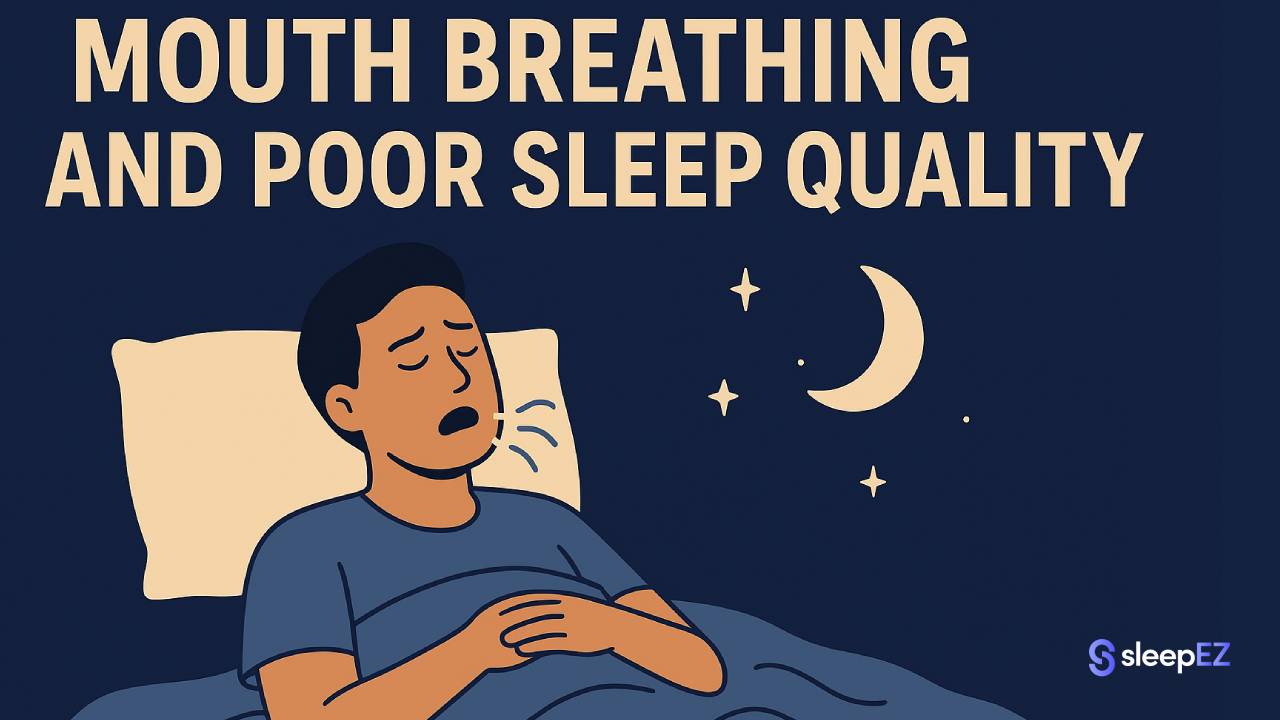
This is the number one reason people wake up with a dry mouth. When you breathe through your mouth at night, air flows directly over your tongue and the inside of your cheeks. This constant airflow evaporates your saliva.
Some people are habitual mouth breathers. Others only breathe through their mouth when their nose is blocked from allergies, a cold, or structural issues like a deviated septum. Either way, the result is the same: you wake up parched.
2. Dehydration
This one is straightforward. Your body needs water to make saliva. If you're not drinking enough during the day, or if you're losing fluids through exercise or alcohol, your mouth will be dry come morning.
Think of it this way: you can't produce what you don't have.
3. Lifestyle Factors (Alcohol, Caffeine, Smoking)
Alcohol and caffeine are both diuretics, which means they make you pee more and lose fluids. Alcohol also directly reduces saliva production. That nightcap might help you fall asleep, but it's probably why you wake up with cotton mouth.
Smoking dries out your mouth and damages the salivary glands over time.
4. Medication Side Effects
Hundreds of common medications list dry mouth as a side effect. Antihistamines, decongestants, antidepressants, blood pressure medications, and muscle relaxants are frequent culprits.
If you started a new medication around the same time your dry mouth began, there's likely a connection.
5. Underlying Medical Conditions
Sometimes dry mouth points to a bigger health issue. Sleep apnea, diabetes, Sjögren's syndrome, and autoimmune disorders can all cause chronic dry mouth.
If you have other symptoms like extreme thirst, frequent urination, loud snoring, or chronic fatigue, talk to your doctor.
What Does Dry Mouth Feel Like?
Dry mouth (medically called xerostomia) has a distinctive set of symptoms:
- Sticky or dry feeling in the mouth and throat
- Dry or rough tongue
- Bad breath (bacteria thrive without saliva)
- Difficulty swallowing, especially dry foods
- Sore or scratchy throat on waking
- Cracked or dry lips
- Needing water immediately upon waking
If you experience these symptoms every morning, it's worth identifying the cause rather than just managing the discomfort.
Why Does My Mouth Get So Dry While I Sleep?
Saliva production naturally slows during sleep. This is normal, your body doesn't need as much saliva when you're not eating or talking.
The problem occurs when additional factors accelerate moisture loss:
Mouth breathing is the biggest culprit. When air flows continuously over your tongue and the inside of your cheeks, it evaporates saliva far faster than your glands can produce it.
Even perfectly hydrated people will wake with a dry mouth if they breathe through their mouth all night.
Dehydration compounds the problem. If you haven't drunk enough water during the day, your body has less fluid available for saliva production.
Dry air, particularly in winter or in air-conditioned rooms, accelerates evaporation further.
Can Sleep Apnea Cause Dry Mouth?
Yes. Sleep apnea is one of the more serious causes of morning dry mouth.
When breathing is repeatedly interrupted during sleep, your body often compensates by opening the mouth to breathe. This causes the same saliva evaporation as habitual mouth breathing.
Signs that sleep apnea may be involved:
- Loud snoring
- Waking with a dry mouth and sore throat
- Morning headaches
- Extreme daytime fatigue despite adequate sleep hours
- Your partner notices you stop breathing during sleep
If you suspect sleep apnea, speak with your doctor. It's a medical condition that requires proper assessment, not something that mouth tape or nasal strips alone can address.
How Do I Know If I'm Sleeping With My Mouth Open?
Many people don't realise they're mouth breathing at night. Here are the signs:
- ✅ You wake up with a dry mouth or sore throat most mornings
- ✅ You snore or your partner says you snore
- ✅ You drool on your pillow
- ✅ You have bad breath in the morning despite good dental hygiene
- ✅ You feel tired even after a full night's sleep
- ✅ Your mouth feels dry within an hour of waking
If most of these apply, mouth breathing is likely contributing to your dry mouth.
How to Stop Waking Up With a Dry Mouth
Now that you know what causes morning dry mouth, let's talk about fixing it. The good news is that most of these solutions are simple and work within a few days.
Start with the basics and work your way to the most effective fix.
Stay Hydrated & Use a Humidifier
Drink plenty of water throughout the day. Keep a glass of water on your nightstand. Stop drinking fluids about an hour before bed so you're not waking up to use the bathroom, but make sure you're well hydrated before that cutoff.
A humidifier adds moisture to the air in your bedroom. This helps prevent evaporation of saliva, especially if you live in a dry climate or run the heat or AC at night.
Review Your Habits and Medications
Cut back on alcohol and caffeine in the hours before bed. If you smoke, quitting will help (along with a hundred other health benefits).
If you suspect your medication is the problem, talk to your doctor. There may be an alternative drug that doesn't cause dry mouth. Never stop taking prescribed medication without consulting your doctor first.
Stop Mouth Breathing
Here's the truth: you can drink all the water you want and run a humidifier all night. But if your mouth is hanging open while you sleep, you're going to wake up dry.
Mouth breathing is the root cause, not just a symptom. Even perfectly hydrated people will have dry mouths if they sleep with their mouths open. The constant airflow is simply too much for your saliva to keep up with.
The most direct way to fix this is to keep your mouth closed at night. That forces your body to breathe through your nose, which is what it's designed to do anyway. Nasal breathing keeps your mouth sealed and your saliva where it belongs.
The easiest way to ensure nasal breathing all night is with mouth tape for sleep. It provides a gentle seal that makes nose breathing automatic. You're not forcing anything. You're just removing the option to let your mouth fall open.
If you want to try this approach, Breathe Mouth Tape is designed with a lip-shaped fit that stays comfortable and secure through the night. Many people find it solves their dry mouth problem within the first few nights of use.
Can Mouth Tape Help Dry Mouth?
If mouth breathing is the cause of your dry mouth, mouth tape may help significantly.
Mouth tape provides a gentle seal over the lips during sleep, encouraging nasal breathing. When your mouth stays closed, air no longer flows over your tongue and cheeks, and saliva stays where it belongs.
Important caveats:
- Mouth tape is only appropriate if your nose is clear and you can breathe comfortably through it
- It's not suitable if you have significant nasal congestion, a deviated septum, or sleep apnea (consult your doctor first)
- It should feel comfortable, not restrictive
Breathe Mouth Tape is designed with a lip-shaped fit and a gentle adhesive that stays secure through the night without causing discomfort on removal. Many people find it resolves their dry mouth within the first few nights of use.
If nasal congestion is making it hard to breathe through your nose, Breathe Nasal Strips may help open your nasal passages before trying mouth tape.
Is Waking Up With a Dry Mouth Bad?
Occasional dry mouth on waking is usually harmless. But chronic dry mouth, happening most mornings, can have real consequences:
- Tooth decay: Saliva neutralises acids and washes away bacteria. Without it, cavity risk increases
- Gum disease: Bacteria thrive in a dry environment
- Bad breath: Reduced saliva allows odour-causing bacteria to multiply overnight
- Disrupted sleep: Dry mouth can cause you to wake up to drink water, fragmenting your sleep
If your dry mouth is occasional and mild, it's likely not a health concern. If it's happening every morning and affecting your dental health or sleep quality, it's worth addressing the underlying cause.
When to See a Doctor About Dry Mouth
Most cases of morning dry mouth are harmless and fixable at home. But sometimes it's a sign of something more serious.
See a doctor if:
- Home remedies don't help after a few weeks
- Your dry mouth is constant, not just in the morning
- You have trouble swallowing or speaking
- You have other symptoms like extreme thirst, unexplained weight loss, or chronic fatigue
- Your tongue has sores or a white coating
These could indicate diabetes, sleep apnea, or an autoimmune condition that needs treatment.
Your Path to Waking Up Refreshed
Waking up with a dry mouth is a solvable problem. For most people, the answer is addressing nighttime mouth breathing. Stop the air from flowing over your mouth all night and you stop the evaporation that causes the dryness.
You don't have to accept waking up parched and uncomfortable. Take control of how you breathe at night and you'll take control of your sleep quality.
Frequently Asked Questions
Why is my mouth so dry when I wake up?
The most common reason is mouth breathing during sleep. Air flowing over your tongue evaporates saliva faster than your glands can produce it.
Dehydration, alcohol, medications, and sleep apnea can also contribute.
Why do I wake up thirsty every morning?
Waking up thirsty usually indicates dehydration or mouth breathing overnight. If it happens consistently, check whether you're drinking enough water during the day and consider whether you might be sleeping with your mouth open.
Can dehydration cause dry mouth?
Yes. Your body needs adequate fluid to produce saliva.
If you're dehydrated when you go to sleep, your mouth will be drier by morning. Drinking enough water throughout the day, not just at bedtime, helps.
Can sleep apnea cause dry mouth?
Yes. Sleep apnea often causes mouth breathing as your body compensates for interrupted breathing.
If you snore loudly, feel fatigued despite adequate sleep, or have morning headaches alongside dry mouth, speak with your doctor.
Does mouth breathing cause dry mouth?
Yes, it's the most common cause. Air flowing continuously over your tongue and cheeks evaporates saliva overnight.
Keeping your mouth closed through nasal breathing or mouth tape can resolve this.
Is waking up with dry mouth a sign of diabetes?
Extreme thirst and dry mouth can be symptoms of diabetes, particularly if accompanied by frequent urination, unexplained weight loss, or fatigue. If you're concerned, speak with your doctor.
Can mouth tape help dry mouth?
Yes, if mouth breathing is the cause. Mouth tape encourages nasal breathing by gently keeping the lips closed during sleep.
It's not suitable for people with nasal obstruction or sleep apnea, consult your doctor if unsure.
Should I be worried about dry mouth?
Occasional dry mouth is usually harmless. Chronic dry mouth, happening most mornings, can affect dental health and sleep quality, and may indicate an underlying condition worth investigating.
Can allergies cause dry mouth?
Yes. Nasal congestion from allergies forces mouth breathing, which causes dry mouth.
Treating the congestion, with nasal strips, antihistamines, or a nasal rinse, can help.
Why do I wake up with a dry throat and mouth?
A dry throat alongside dry mouth usually indicates mouth breathing. Air flowing through your mouth overnight dries both your mouth and throat.
Nasal breathing support may help.


Leave a comment
This site is protected by hCaptcha and the hCaptcha Privacy Policy and Terms of Service apply.